What Are Tuning Forks? A Beginner’s Guide to Tuning Fork Sound Healing
There is something different about listening to a sound when you aren’t listening for information.
We spend so much of our lives surrounded by sounds that ask something from us. A phone notification asks us to respond. A conversation asks us to participate. An alarm asks us to move. Traffic asks us to pay attention. Even music can sometimes become another form of stimulation.
And then there are sounds that ask nothing from us at all.
They simply invite us to listen.
This is one of the qualities I love about working with tuning forks. Their sound is simple, clear, and precise, creating an experience that can bring your attention away from everything happening around you and back toward the present moment.
Tuning forks are increasingly used in sound healing and other wellness practices as a way of working with sound and vibration. But if you’ve never experienced them before, you may wonder: What exactly are tuning forks? How do they work? What does a tuning fork session actually feel like?
Let’s take a closer look.
What Are Tuning Forks?
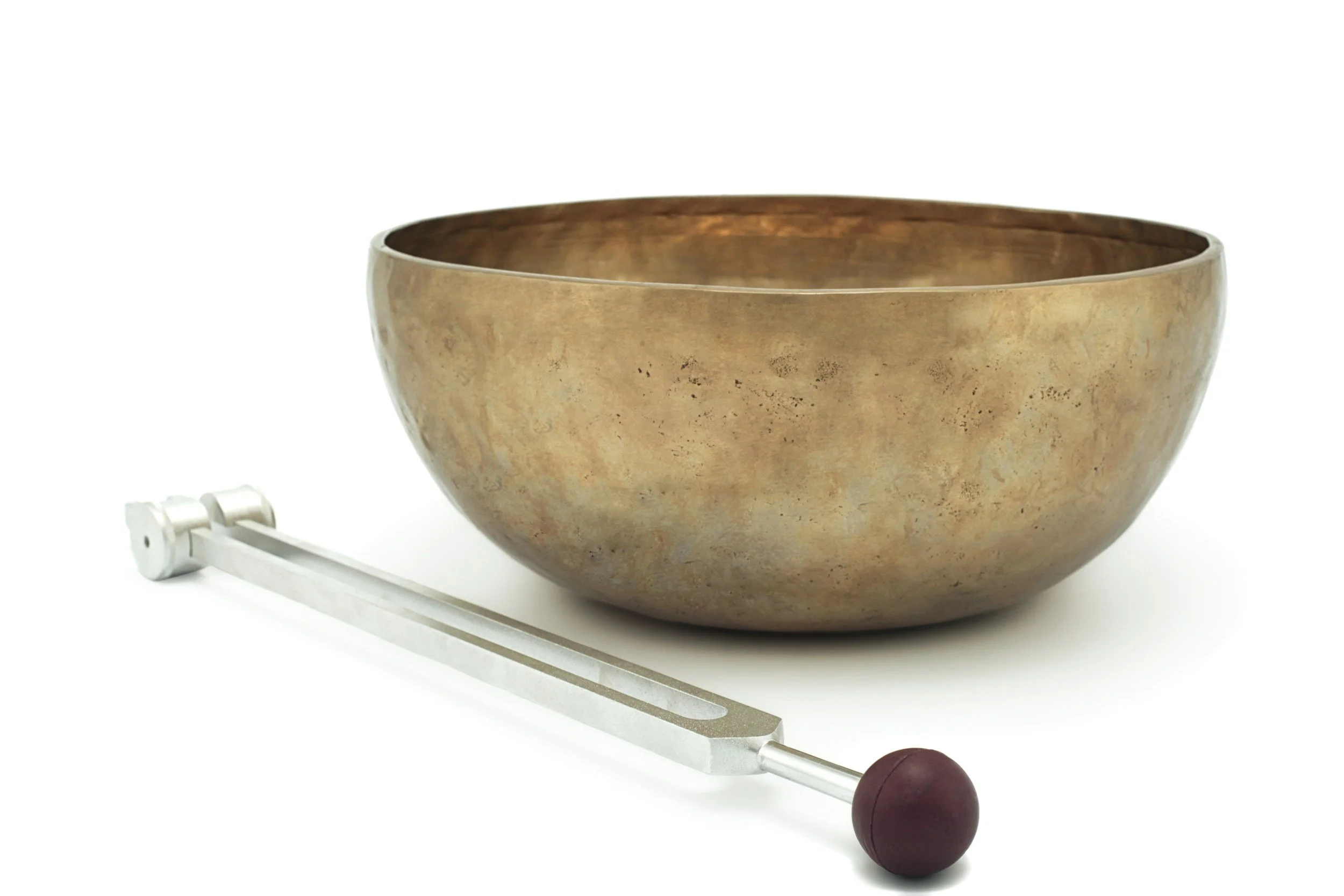
A tuning fork is a simple metal instrument designed to produce a specific pitch when it is gently activated. You may have seen one before in a musical or scientific context, but tuning forks are also used in sound healing practices as a way of bringing focused sound and vibration into a session.
When a tuning fork is activated, it produces a clear, sustained tone. Depending on the type of fork and how it is used, you may experience the sound primarily through your hearing, or you may also notice a subtle physical vibration.
Unlike many sound healing instruments, tuning forks create a very focused sound. There is no melody to follow and nothing you need to learn. You simply listen and notice.
For me, this simplicity is part of what makes them so beautiful.
How Are Tuning Forks Used in Sound Healing?
Sound healing is a broad practice that can involve many different instruments, including singing bowls, gongs, drums, chimes, and tuning forks. Each creates a different sensory experience.
Tuning forks offer something particularly focused. Their tones can be introduced one at a time, allowing the sound to become an object of attention rather than another layer of stimulation.
During a session, a practitioner may activate a tuning fork and allow the sound to resonate in the space around you. Depending on the type of fork and the practitioner’s approach, some forks may also be used closer to or directly on the body so that the vibration can be experienced physically.
The intention isn’t to force your body into a particular state. Instead, sound can give your attention somewhere gentle to rest.
You don’t have to analyze the sound. You don’t have to concentrate perfectly. You can simply listen and notice what you experience.
Why Are There Different Tuning Forks?
One of the first things you may notice when exploring tuning forks is that they don’t all sound the same.
Different tuning forks are designed to produce different pitches or frequencies. Some have a higher, brighter tone, while others sound deeper and more resonant. There are also different types of tuning forks designed for different ways of working with sound and vibration.
In sound healing, practitioners may choose different forks depending on the intention of the session, the experience they are creating, and how they want the sound or vibration to be experienced.
You don’t need to believe that a particular frequency is going to “fix” something in your body for a tuning fork session to be meaningful. Sometimes, the experience can be much simpler than that: you hear a sound, you feel a vibration, you become still, and you notice what happens.
Weighted and Unweighted Tuning Forks
There are different types of tuning forks, and two common categories you may encounter in sound healing are unweighted and weighted tuning forks.
Unweighted tuning forks are generally designed to create a clear, audible tone that resonates primarily through the surrounding space. They can be used to create an immersive listening experience, with the sound becoming a gentle point of focus during meditation or relaxation.
Weighted tuning forks have added weights on the ends of the prongs. Because of their design, they tend to produce a stronger physical vibration and are often used when the practitioner wants the vibration to be experienced more directly through the body.
The experience of the two can be quite different.
One may feel more like listening. The other may feel more like sensing.
When they are used together, they can create a layered experience that brings both sound and physical vibration into the session.
What Does a Tuning Fork Feel Like?
There isn’t one universal way to experience a tuning fork.
You might notice the sound immediately. You might feel a gentle vibration in or around the body. You might become aware of sensations that you hadn’t noticed before. You might feel relaxed or sleepy, or simply find that your attention becomes quieter.
And you may not experience any dramatic physical sensation at all.
That’s completely okay.
One of the things I always want to emphasize with energy and sound work is that there is no particular experience you need to have. You don’t need to feel a strong vibration for the session to be meaningful. You don’t need to see colors, experience an emotional release, or have some profound realization.
You can simply lie down, listen, breathe, and notice.
Sometimes the most valuable part of an experience is not what happens, but the fact that you finally have enough stillness to notice what is already there.
Tuning Forks and Deep Relaxation
Our attention is constantly being pulled in different directions.
A message arrives. Someone needs something. We remember an appointment. We think about work. We scroll. We plan. We replay conversations. We think about what needs to happen tomorrow.
Even when we are physically sitting still, our minds may still be moving.
Sound can offer another way of relating to that constant mental activity.
When you listen closely to a sustained tone, there is nothing you need to respond to. You don’t need to make a decision about it. You don’t need to solve anything.
You can simply listen.
For some people, this creates a natural transition into a quieter, more relaxed state. Sound-based practices may also support relaxation by giving attention a gentle sensory focus, rather than asking you to simply “stop thinking.”
This is one reason I find tuning forks especially beautiful for people who struggle with traditional meditation.
You don’t have to empty your mind.
You simply have something to listen to.
Do You Have to Believe in Sound Healing?
You don’t need to believe in energy, frequencies, chakras, vibration, or anything else before experiencing a tuning fork session.
You can come with curiosity.
You can even come with skepticism.
There is nothing you need to convince yourself of.
You can simply notice the sound. Notice your breathing. Notice your body against the surface beneath you. Notice whether your thoughts become quieter or whether they continue moving. Notice whether you feel relaxed, restless, sleepy, emotional, peaceful—or nothing in particular.
There is no test you need to pass.
The experience belongs to you.
What Happens During a Tuning Fork Sound Healing Session?
A tuning fork session begins with creating the conditions for you to slow down.
You’ll settle into a comfortable position and have some time to arrive—to physically settle into the space and allow yourself to transition out of whatever came before the session.
From there, tuning forks may be used around the body and, depending on the type of fork, in contact with different areas of the body. The sound and vibration become part of the sensory experience, creating an opportunity to bring your attention inward.
Some moments may feel very subtle. Others may feel more noticeable.
You don’t need to do anything while the session is happening. You aren’t expected to meditate perfectly or control your thoughts. You can simply rest and allow the sound to become something you experience rather than something you have to understand.
For me, this is where sound healing becomes less about the instrument itself and more about the space it creates.
A space to pause.
A space to listen.
A space to come back into your own experience.
Tuning Forks, Reiki, and the Body
Tuning forks can also be incorporated into a broader healing session alongside Reiki and other forms of energy or somatic work.
Each practice brings a different quality to the experience.
Reiki creates a quiet, receptive space centered around rest and awareness. Sound introduces another sensory pathway through which you can experience the moment. Tuning forks bring focused tones and, with weighted forks, physical vibration into the experience.
These practices don’t have to compete with one another.
They can simply become different ways of inviting you to slow down and reconnect.
At Inner Sanctuary NYC, I work with tuning forks as part of a personalized experience rather than following a rigid formula. The session can incorporate both weighted and unweighted tuning forks, allowing sound and vibration to become part of a deeper full-body experience.
What If You Don’t Feel Anything?
This is worth saying again because it is something many people wonder about. You don’t have to feel anything dramatic.
You might hear the sound and immediately notice a sensation. You might become deeply relaxed. You might fall asleep. You might notice your thoughts slowing down. Or you might spend part of the session thinking about your grocery list and that’s okay. There is no correct response to sound healing.
Our bodies and minds don’t respond identically to every experience, and there is no need to compare your experience with someone else’s. Rather than asking, “Did I feel enough?” you might simply ask, “What did I notice?” That question leaves much more room for curiosity.
You Don’t Have to Know What You Need
Sometimes people arrive for a healing session knowing exactly what they want.
They want to relax. They want to slow down. They want to reconnect with themselves. They want a quiet moment away from the constant stimulation of everyday life.
And sometimes they arrive without knowing at all.
Maybe you’re tired but don’t know what kind of rest you need. Maybe you’ve been carrying a lot mentally and haven’t had much space to simply stop. Maybe you feel disconnected from your body. Or maybe nothing is particularly wrong—you simply feel drawn toward having an experience that is different from your everyday routine.
You don’t need a perfect explanation.
You can simply arrive.
The session doesn’t have to become another thing you need to accomplish.
Tuning Fork Sound Healing in NYC
Living in New York City can make stillness feel surprisingly difficult to find.
There is always movement around us. There are trains, traffic, conversations, construction, notifications, work, social plans, and somewhere else we are supposed to be.
Finding a space where you don’t have to respond to anything can become its own form of nourishment.
Tuning fork sound healing in NYC offers an opportunity to step away from that constant stimulation for a little while and turn your attention toward something much quieter.
You don’t have to leave the city to experience stillness.
Sometimes you simply need a space where the outside world becomes quiet enough for you to hear yourself again.
Experience Tuning Fork Sound Healing at Inner Sanctuary NYC
At Inner Sanctuary NYC, tuning forks are incorporated into a personalized healing experience designed around rest, presence, sound, vibration, and reconnection.
You don’t need previous experience with tuning forks. You don’t need to understand frequencies. You don’t need to know how sound healing works before you arrive.
You simply need to give yourself permission to slow down.
To listen.
To feel.
And to receive.
Sometimes, coming back to yourself doesn’t require finding another answer.
Sometimes, it begins by becoming quiet enough to listen.